
For more specifics in each area and setting up inventory use the following link: https://help.cenpoint.com/v1/docs/en/set-up-inventory
Inventory
Parts Categories
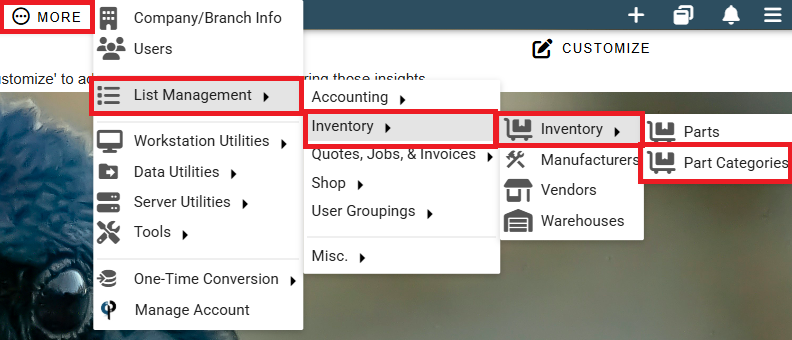
Set up your Parts Categories by going to More -> List Management -> Inventory -> Part Categories
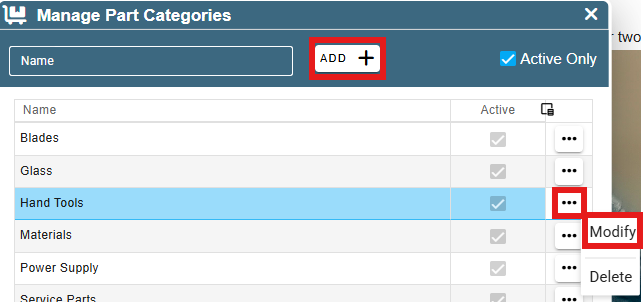
To Add a new Category- Click the Add Button
To Modify a Category- Click the Ellipsis -> Modify to edit an existing Category.
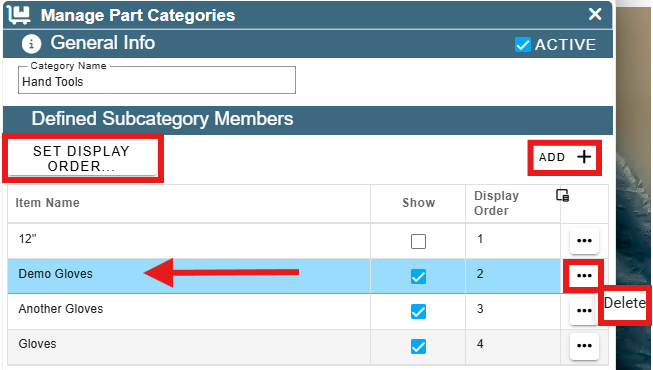
Inside each category you can make sub-categories.
Click the 'Add' to create a new sub-category.
Click the Ellipsis -> Delete an existing sub-category
To rename a sub-category simply click into the item you want to change! It's a text field you can modify on the grid itself! :D
Set Display Order will let you rearrange the order of the items in the grid.
If you grid looks different than mine here, know you can rearrange this grid as well, click and drag to order things the way you want.
Manufacturers
Set up your Manufacturers by going to More -> List Management -> Inventory -> Manufacturers
.png)
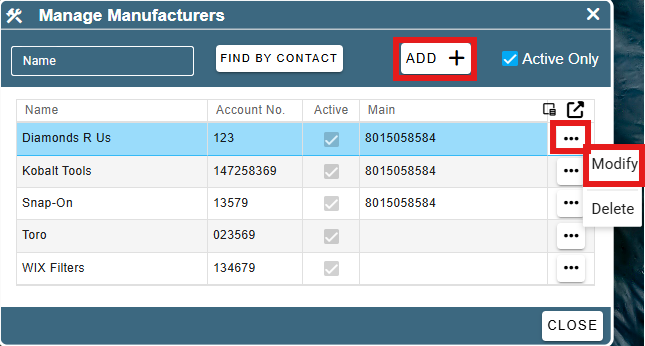
Click 'Add New' to define a Manufacturer. Highlight an existing Manufacturer and click 'Modify' to edit them.
Inside each Manufacturer you can add/edit the contacts you have associated with the manufacturer.
Aside from the expected information like addresses and names, you can also record any notes you feel important and associate them with the manufacturer.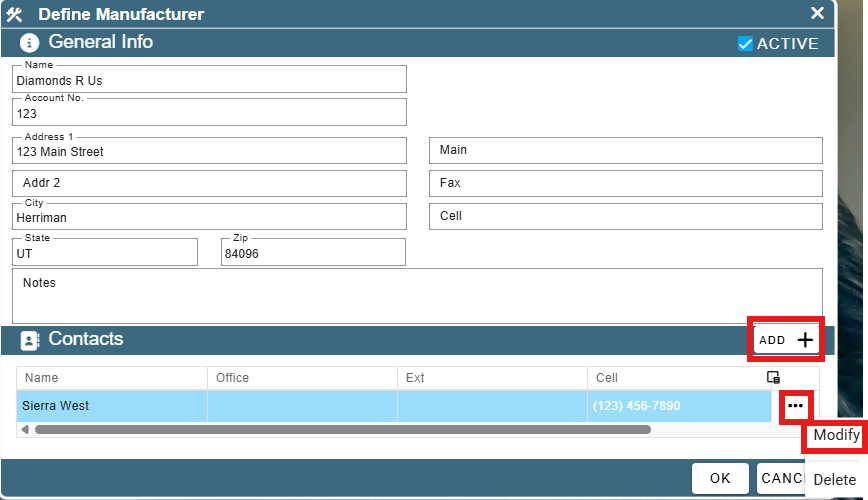
Vendors
Go to More -> List Management -> Inventory -> Vendors
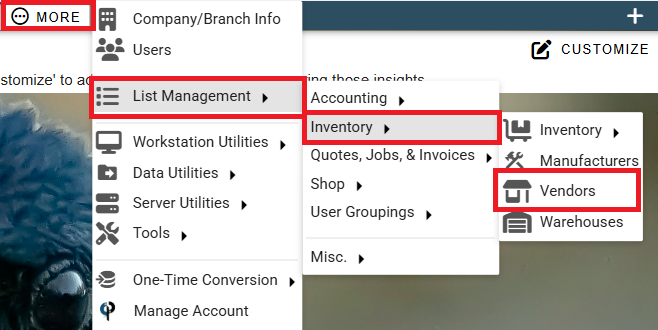
Click 'Add New' to create a Vendor. Click the Ellipsis -> Modify to edit an existing vendor.
.png)
Enter the name of the vendor or use the Category drop down to filter your search for vendors.
When creating a vendor select which category it should be a part of.
Other/1-Off means that you likely won't use this vendor again.
Vendor hints that it's a vendor you'll be visiting repeatedly.
Add notes about the vendor if desired.
.png)
Add contacts for this Vendor by clicking the 'Add' button. Edit an existing contact by clicking the 'Open' button.
Select which branches will be able to see this vendor in CenPoint..png)
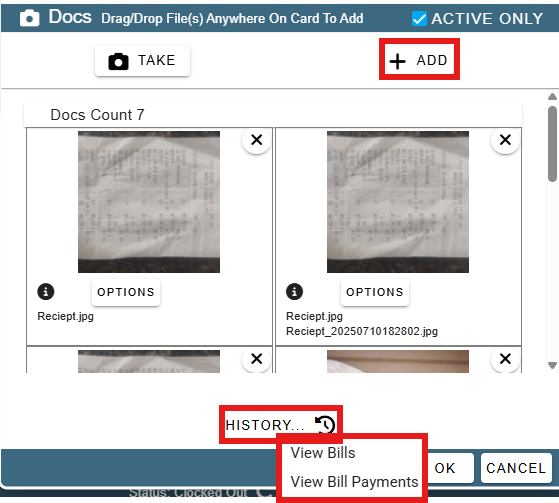
Add documents by clicking the 'Add' button.
Click the 'History' button to see bills and payments associated with this vendor.
Click 'OK' to close the window.
Warehouses
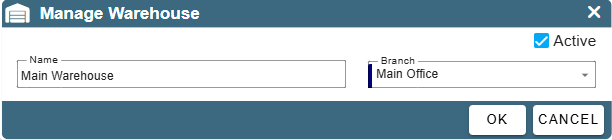
Go to More -> List Management -> Inventory -> Warehouses
.png)
Click 'Add' to create a new warehouse.
Click the Ellipsis -> Modify to edit an existing warehouse.
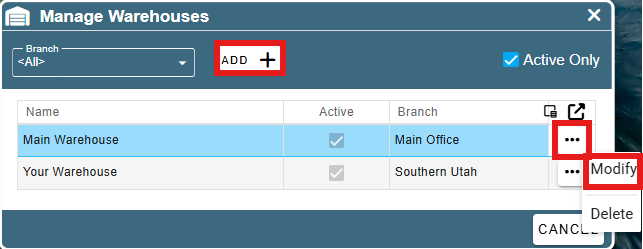
Write the name of the warehouse and select which brand it should be in.
Parts
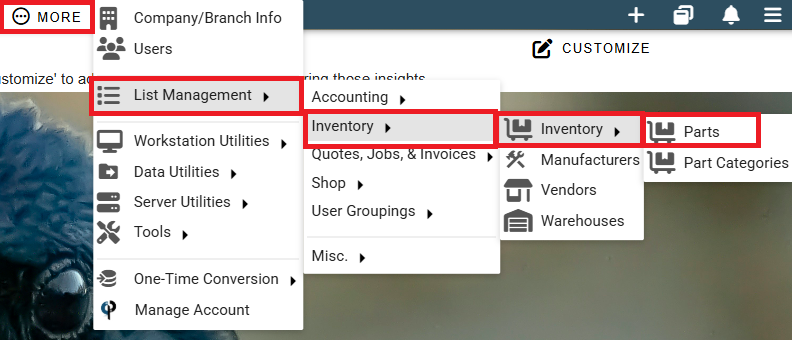
Now that the basics are covered, we can set up Parts by going to More -> List Management -> Inventory -> Inventory -> Parts
Use the filters on the right to narrow your search by things like manufacturer, vendor, or part id to help you find the part you're looking for.
Click 'Add' to create a new part.
Click the Ellipsis -> Modify to edit an existing part.
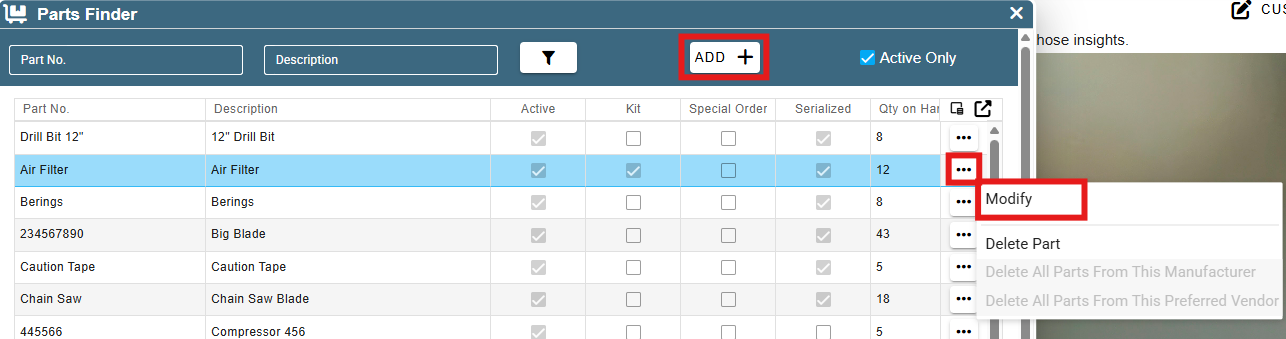
Delete Part will deactivate the part. (No permanent deletion here, just in case you want to bring it back eventually. :) )
Delete All Parts From This Vendor will deactivate all the parts from the Manufacturer if the part is associated with one.
Delete All Parts From This Preferred Vendor will deactivate all the parts from the Preferred Vendor if the part is associated with one.
Use the following link for more information on setting up parts, creating P.O.'s and Inventory:
FAQ:
The price for a new part is not right
CenPoint uses FIFO (First In First Out).
FIFO is how CenPoint uses the inventory costs because the cost may have changed over time when buying the part.
Example: You bought a part for $10.00 and you bought 10 of them, then you re-bought another 10 of that same part but the cost is now $15.00,
CenPoint will not use the $15.00 price until the first 10 at $10.00 are consumed from the inventory.
If you need to use the new price, you can adjust the quantity on hand to Zero then add the new parts or consume the parts internally.